Heat stress feels different before it looks dangerous
The first sign usually isn’t dramatic. It’s the quiet mismatch: the route you know by feel suddenly asks for extra effort, and your pace slips even though your breathing seems “fine.” In sticky heat, sweat may sit on the skin instead of evaporating, so cooling lags behind what your muscles are producing. That can show up as a higher heart rate for the same easy effort, a heavier, almost “swollen” feeling in the legs, or a growing irritability that’s easy to blame on motivation.
What makes this tricky is how normal you can look while the strain is building. Some people assume danger only starts with dizziness or cramps, but earlier patterns often arrive first: you stop feeling as sweaty, your mouth stays dry, your usual water plan feels strangely inadequate, or recovery drags into the next day. None of this guarantees a problem—heat responses vary and fluctuate—but repeated sessions where effort keeps rising while output falls are worth treating as real information, not a character test.
Why summer workouts overload the body faster

You might notice it at a stoplight or halftime: you’re breathing steadily, but your skin feels hot in a way that doesn’t settle, and your watch shows your heart rate still climbing. In summer, your body is trying to do two jobs at once—send blood to working muscles and send blood to the skin to dump heat. When the air is warm (and especially when it’s humid), sweat doesn’t evaporate as efficiently, so you can keep “sweating hard” without getting the same cooling payoff. The result is a kind of hidden tax on every pace and surge.
That tax stacks quickly because the cost isn’t just energy—it’s fluid and circulation. As you lose water through sweat, blood volume can drop, and the same effort may demand a higher heart rate to move enough blood around. Small accelerations, hills, and long steady blocks can push core temperature upward faster than expected, so pace drift and heavier legs show up earlier. And if you start the next session not fully recovered or slightly underhydrated, the overload can feel like it arrives right from the warm-up.
Hydration helps, but the story is complicated
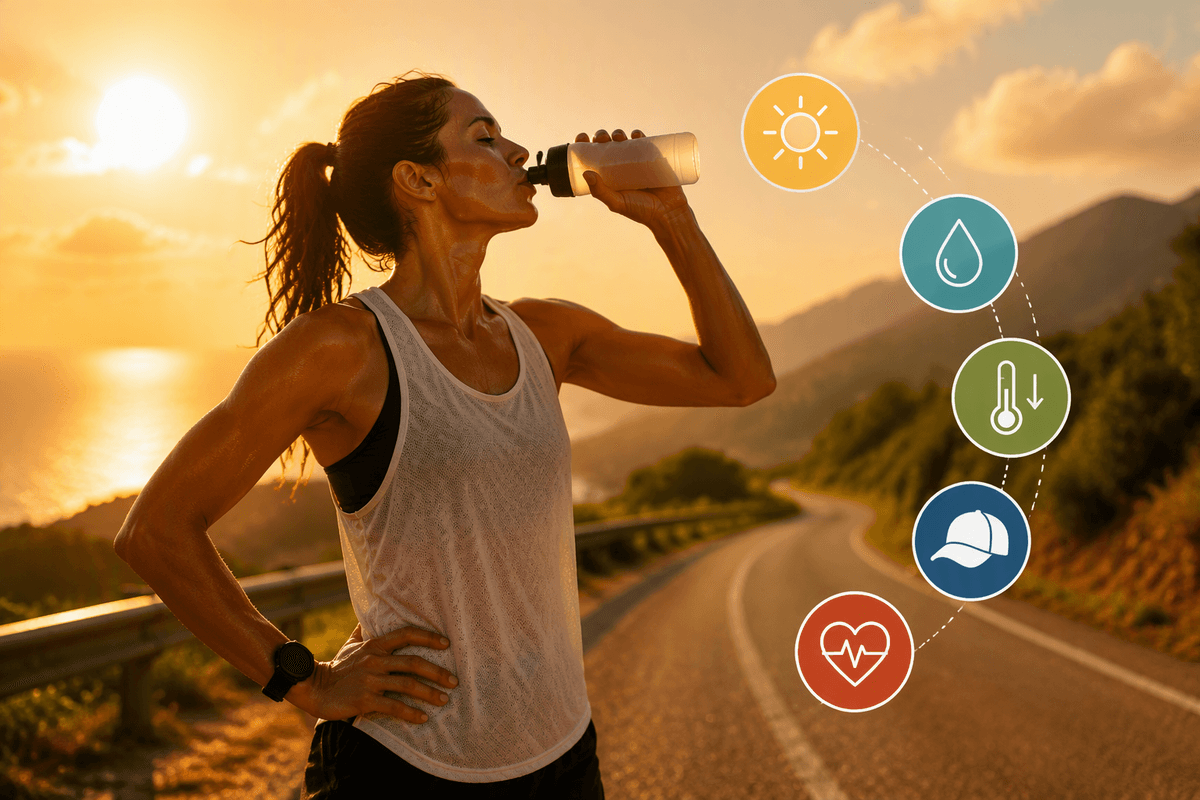
You take a long pull from your bottle and expect the effort to settle, but the “easy” pace still feels sticky. That’s the confusing part: drinking can help, yet it doesn’t instantly undo the heat load you’re carrying. In humid conditions, you may be losing a lot of fluid without seeing the usual clues—sweat rolling off instead of evaporating, or salt drying so fast you miss it. Sometimes the first sign isn’t thirst at all, but a heart rate that won’t come down between surges, or legs that feel oddly flat even though you’re sipping regularly.
It also isn’t just about replacing water. If you dilute yourself with lots of plain fluid while sweating heavily, you can end up feeling bloated, sloshy, or even a little foggy—yet still not performing well. And on other days, you may drink “enough” and still finish with dark urine, a headache, or next-day fatigue because the session simply produced more heat and sweat than your plan accounted for. The pattern matters more than a single bottle.
Acclimation changes tolerance over days, not hours
It often shows up as a small surprise on day three or four: the same mid-morning loop still feels warm, but the effort stops “spiking” as early, and your shirt is wet sooner. A lot of people interpret that as finally finding the right bottle or the right mindset, when it may just be your body starting to re-learn heat handling. One hot run doesn’t “toughen you up” by the next afternoon, and a single cool day can make you feel oddly exposed again.
Across several days, you may notice earlier, steadier sweating, a slightly lower heart rate at the same easy pace, and fewer sharp jumps in perceived effort—without the weather changing much. But acclimation isn’t perfectly consistent: humidity, sleep, and yesterday’s fatigue can blur the signal. If you keep forcing normal splits while you’re still adapting, it’s easy to mistake heat strain for fitness loss, then carry that frustration (and extra stress) into the next session.
Choosing intensity becomes a safety decision in heat
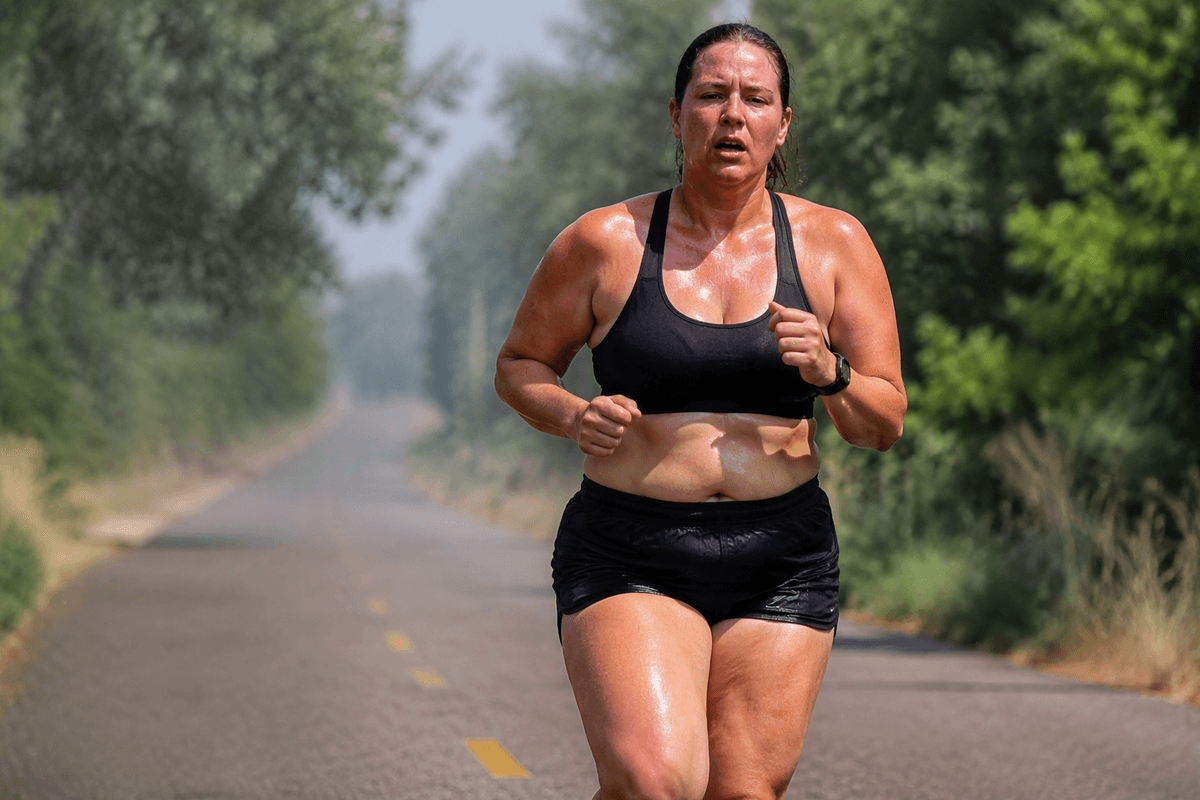
Halfway through a run, the same pace can suddenly feel “too loud” in your body—heart rate hovering higher than usual, breathing still controlled, but the skin heat and leg heaviness keep creeping up. That’s often where intensity stops being a simple training choice and starts behaving like a heat-management decision. In cooler weather, a harder block usually costs you mainly in muscle fatigue. In heat and humidity, it can also pull blood away from the skin, limit cooling, and push temperature upward faster than you expect, especially when you stack surges, hills, or long steady efforts.
You might assume you’re just having an “off day,” then notice pace drifting even as effort rises, or that you’re working harder just to hold form. Sometimes the riskier move isn’t doing the workout—it’s insisting on the same splits when conditions are different. If the pattern continues across sessions—higher heart rate for the same effort, less sweat despite feeling hotter, or recovery that stays sticky into the next day—it’s usually worth treating that as a boundary, not a challenge.
Cooling tactics that work and when they backfire
You notice it first in small choices: standing in a sliver of shade at the trailhead, dunking your hat at a fountain, letting cold water run down your wrists. Those quick cooling moves can feel like they “reset” effort because they help your skin shed heat, even if your breathing and legs haven’t changed much. A light-colored, breathable shirt, a steady stream of airflow (bike speed or a breezier route), and pouring water over your head can all support evaporation—when the air actually allows it.
But some tactics backfire in ways that are easy to misread. Heavy ice vests or constant cold dousing can make you feel deceptively comfortable and tempt you into pushing pace while your internal heat load still climbs. On the other end, over-shading and under-sweating (staying too covered, skipping airflow) can trap humidity against the skin. Even “more water” can become a problem if it turns into sloshing and nausea, leaving you cooled on the outside but unsettled enough to stop drinking or fueling when you need consistency.
Red flags, recovery, and higher-risk situations
Sometimes the first “red flag” is how ordinary the start feels—then, a mile later, you realize you can’t find a comfortable gear. Your heart rate keeps floating upward at the same effort, you stop sweating as much despite feeling hotter, or you get chills or goosebumps in warm air. Nausea that doesn’t settle, a headache that builds, new clumsiness, or feeling unusually confused about pace or direction are also signals that the session is no longer just “tough.” In team settings, it can look like a player who gets quiet, stops talking, or seems oddly irritable between reps.
Recovery can be the second warning. If you’re still wiped out that night, sleep poorly, wake up with dark urine, or your legs feel heavy again during the warm-up the next day, heat load may be carrying over. Risk tends to rise with long, unshaded workouts, high humidity, back-to-back hard days, and when you start slightly under-fueled or under-slept. Medications, illness, and a recent stomach bug can quietly shrink your margin, even when the weather looks “manageable.”