Why November reveals Utah’s quieter wonders
At the Salt Lake City rental counter, the first real decision isn’t which canyon to chase—it’s whether you’re willing to let November set the pace. In mid-November, Utah’s famous stops can feel calmer simply because fewer people want to gamble on cold mornings and early sunsets, but the bargain comes with strings: trailheads that are blissfully empty at 10 a.m. can feel rushed by 4:30 p.m., and anything shaded can hold ice longer than you expect. If you’re the kind of couple that likes 5–8 mile hikes, this is the month where starting early matters more than squeezing in “one more viewpoint.”
What works surprisingly well is how the landscape shifts into a more forgiving rhythm: you can pause at small pullouts, walk short slickrock loops, and still feel like you earned the day without fighting lines. The catch is that November doesn’t reward rigid plans—one storm can turn a scenic gravel road into a no-go, and high-elevation “sure things” can suddenly demand traction and extra time. Treat November like a quiet-scenery season with built-in contingency, and it becomes less about checking boxes and more about choosing the routes that stay reliable.
Choose your base: canyon country or high country
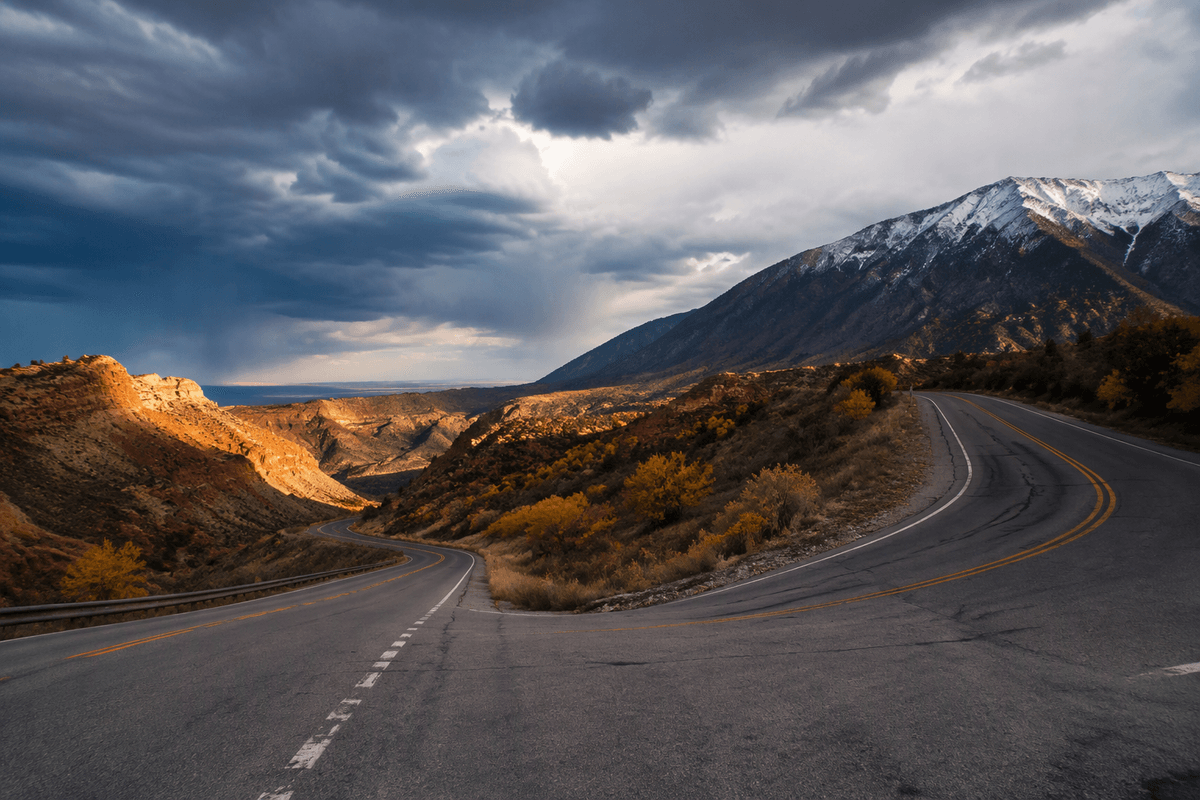
The first fork in the road usually hits around Provo: do you drop south and stay low, or aim for the mountains and accept that a storm may redraw your week overnight? If you want the most “November-proof” base, canyon country (think the Escalante orbit or the Capitol Reef/Torrey area) tends to behave better: lower elevations, more sun on trails, and fewer surprise chain-required mornings. It’s still cold at dawn, but slickrock dries faster than shaded forest paths.
High country can be spectacular in mid-November—quiet aspens, empty overlooks—but it’s also where your SUV rental feels least predictable. Places like the Boulder Mountain, higher parts of Dixie National Forest, or anything that relies on seasonal roads can flip from easy to risky with one overnight system, and daylight makes detours expensive. If you choose high country, book lodging where you have a “drop lower” plan within an hour or two (red rock hikes, scenic drives on paved highways) so you’re not stuck burning half the day searching for open trailheads.
November logistics: weather, roads, daylight, gear
One morning outside Torrey we had clear pavement and frost on the windshield; by the next pass, the same shade held slick patches that felt invisible until the tires hummed. That’s the November pattern: forecasts are useful, but elevation and aspect matter more than the icon on your phone. If your “quiet” plans rely on being above 8,000 feet, you’re accepting more last-minute reroutes—sometimes not dangerous, just slow enough to eat the whole afternoon.
Road reality is mostly about surface and commitment. Paved highways (UT-12, UT-24, US-89) are usually dependable, but the scenic spurs that make lesser-known Utah feel special—gravel to overlooks, washboard to trailheads—turn into a costlier bet after precipitation. Even with an SUV, rental tires are rarely winter-focused, and you don’t want to learn that on a narrow clay road where turning around is the hardest part. When something feels borderline, it’s smarter to pivot to slickrock or river corridors than to “try it for a mile.”
Daylight is your strictest budget item. In mid-November, plan hikes like you’re paying overtime after 3 p.m.: start earlier, keep one short “sunny-side” loop in your pocket, and treat headlamps as mandatory gear, not emergency gear. Microspikes can be overkill on warm afternoons, but they’re the cheapest way to keep an icy morning from dictating your entire day.
Hidden beauty stops that reward slow detours
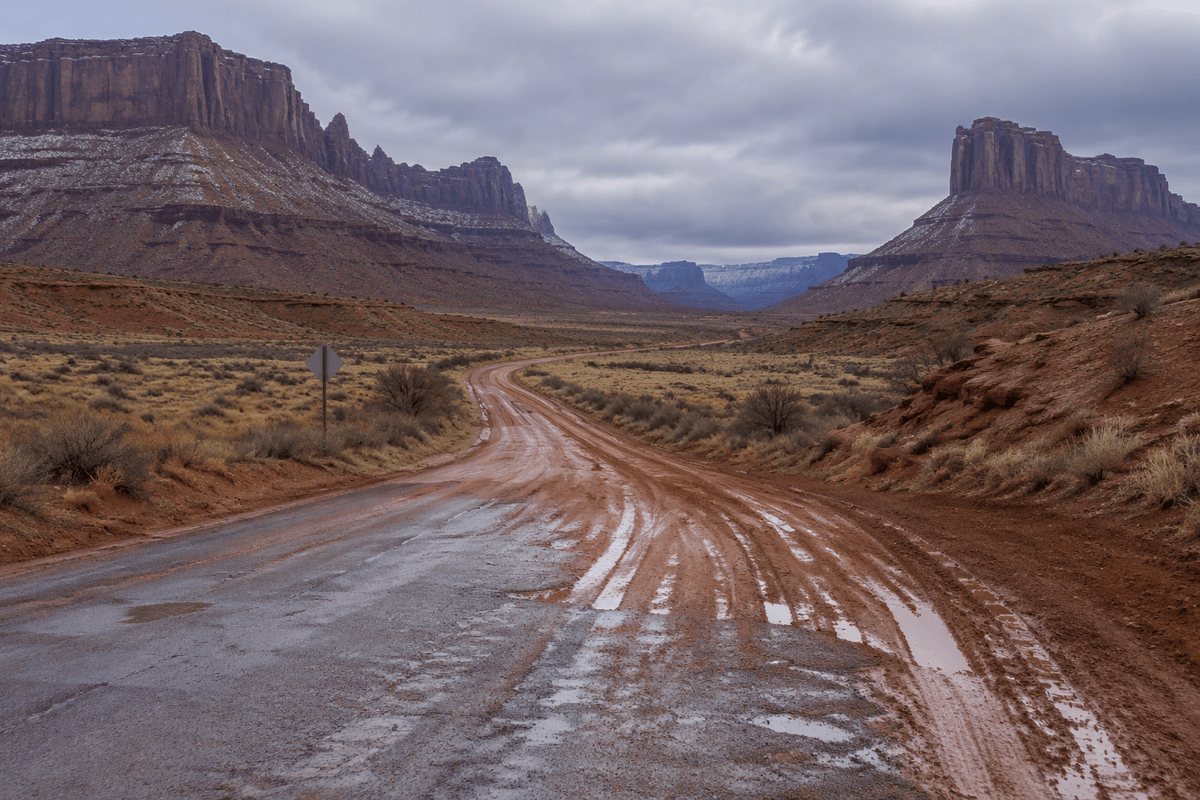
We almost skipped the Burr Trail switchbacks because the map made it look like “extra” for a short November day, but it’s the kind of detour that pays off precisely because it’s slower. From Boulder, the paved section gives you big views quickly, then the road drops into a different world; the catch is committing too far onto wet clay once you leave pavement. If it’s been dry for a couple days, you can nibble at the scenic sections and turn around early without it feeling like a failed plan—if it’s rained or snowed, make the conservative call and treat the overlook stops as the win.
Closer to Torrey, the Cathedral Valley area is the classic “looks easy, becomes a project” side trip: remote, beautiful, and very sensitive to road conditions. What works is using it as a fair-weather bonus day rather than a pillar of the itinerary, because a little moisture can turn the drive into slow-motion stress. On a tighter window (or if you wake up to ice), swap it for Lower Calf Creek Falls or a Capitol Reef day built around shorter, sunny trails and viewpoints—less bragging-rights isolation, but far more predictable in November.
When you want quiet without gambling on backroads, the San Rafael Swell is an underrated middle ground: big-space scenery, minimal crowds, and plenty you can sample from pavement. The limitation is that it’s easy to underestimate drive time between “small” stops, so pick one anchor (a short slot, a slickrock walk, a viewpoint) and leave buffer for the light to disappear earlier than you expect.
Stay and refuel: towns, lodges, hot springs
By the time we rolled into Torrey after a windier-than-expected afternoon on UT-24, the question wasn’t “what’s next?” so much as “how far do we want to drive for a decent dinner and a warm room?” In mid-November, this is where your plan either holds together or starts hemorrhaging daylight: small towns can be perfect for recovery nights, but they also come with limited restaurant hours and fewer last-minute lodging options. If you’re trying to stay moderate-budget, it’s worth reserving your “base” nights (Torrey/Escalante or a Moab-style hub) and leaving the in-between nights flexible—because the night you need to drop lower to avoid snow is rarely the night you want to be locked into a high-elevation cabin.
Torrey works well when you want early starts in Capitol Reef without paying a drive-time tax each morning; the constraint is that evening choices can feel thin if you arrive late. Escalante is similarly practical for a couple nights, but it’s more of a “cook something simple, sleep early” town than a place you linger—great for hikers, less great if you’re counting on a lively main street. If you’re craving an actual soak, plan it like an appointment: hot springs can be the best bad-weather pivot day, but they also add drive time and can turn into a half-day commitment when the sun’s already on a short clock.
Closing: how to choose your perfect quiet Utah loop
On our last morning, staring at a map with three “almost doable” detours, the most useful question became: what can you still enjoy if you lose half a day to ice? For 6–8 days in mid-November, a quiet loop works best when you commit to one reliable low-elevation core (Capitol Reef/Torrey plus Escalante is the cleanest pairing) and treat anything that leans remote—Cathedral Valley, long gravel spurs, higher forest roads—as a fair-weather add-on, not a promise.
If you want decision clarity, reserve the lodging that protects your mornings (2–3 nights in one hub), then keep the middle flexible so you can slide east/west based on the forecast instead of “pushing through” a storm on a short-day drive. When the road looks questionable, cash in your backup: paved-scenic highways, short slickrock loops, river corridors, or even a soak day. You’ll come home with fewer heroic miles—and a much higher success rate.