You’re maxed out, and the bills keep coming
The paycheck still hits on the same days, but it doesn’t land the same way. Rent took its share, groceries jumped again, and the card balance never really reset after the last “one-time” emergency. You can feel the squeeze in small choices: putting off a prescription refill, stretching the tank, hoping nothing else breaks before payday. It’s not that you don’t know what the numbers say—you’ve just been living inside them long enough that every option feels like a trap.
Working extra hours sounds clean on paper, until you picture the week it steals from your sleep and your patience. Cutting spending sounds responsible, until it means losing the few things that keep you steady. The pressure isn’t only the debt; it’s the rhythm of bills arriving faster than you can recover.
Name the constraint: money short, energy shorter
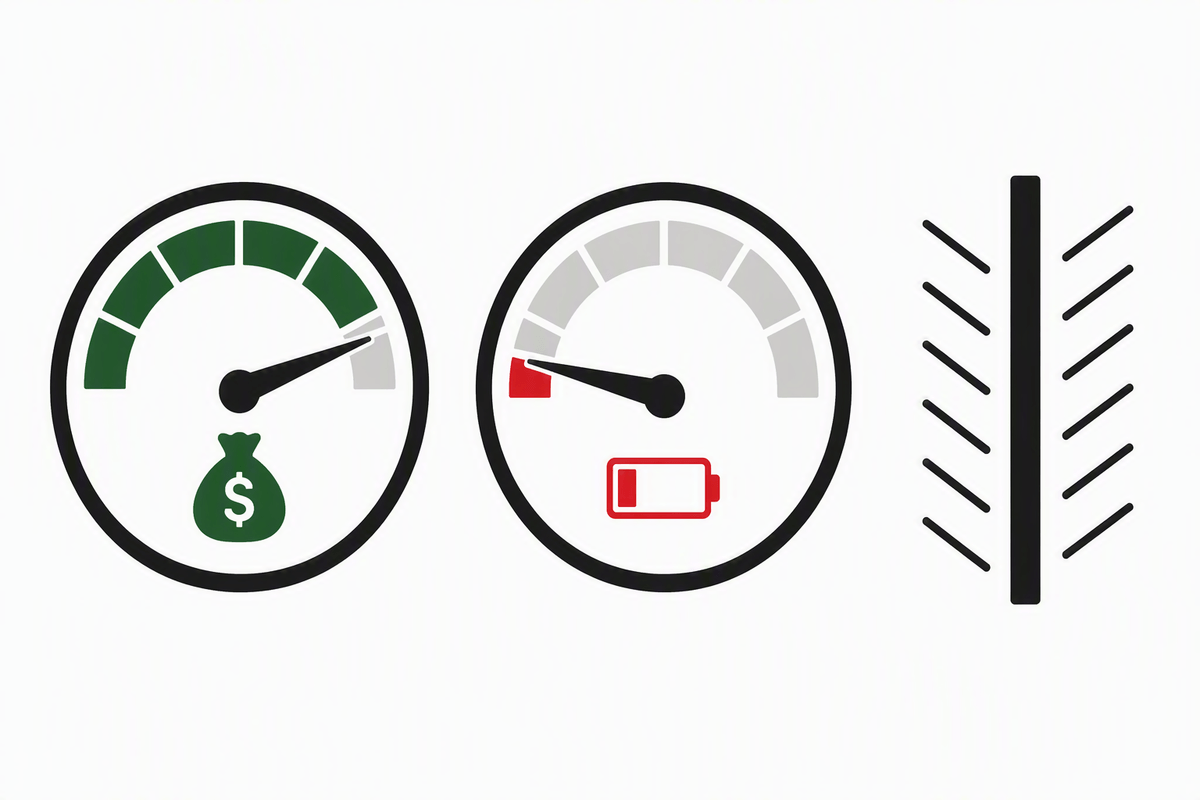
Before anything changes, it helps to say out loud what’s actually scarce. Not “money,” in the abstract—cash between now and the next two paydays. And not “time,” in the motivational sense—usable energy after work, after commute, after whatever you’re carrying at home. If the shortfall is $300 and the only way to get it is six extra hours that reliably wrecks your sleep, that’s not a simple math problem. That’s a trade you’ll pay for twice.
So you name the constraint like a boundary: “I can add at most one shift this month,” or “I can’t risk a missed rent payment,” or “I need one full day off each week to stay functional.” Write it down. Those lines keep the next moves from turning into another month of scrambling and recovery.
Stabilize this month’s cash flow without heroics
With those boundaries on paper, the goal shifts: get through this month without creating a bigger mess next month. Start by listing only what can hit before the next paycheck—rent, utilities, minimum debt payments, childcare, gas, prescriptions. Then match them to the exact pay dates, not the “monthly” idea of income. The friction shows up fast: an auto-draft two days before payday, a credit card minimum that lands the same week as rent, a late fee that’s basically a penalty for bad timing.
Now make one “no-heroics” move to smooth the calendar. You can move due dates, split a payment, or ask for a one-time extension—especially on utilities, insurance, and some lenders. Pick the bill that causes the most cascade damage if it bounces, and protect that first. The constraint is time: do the calls in one short block, and stop when you’ve secured one clean win.
Pick one debt lever to pull first
Once the calendar stops bleeding late fees, the next temptation is to “do something” about every balance at once. That’s usually how people end up paying five creditors on payday and still overdrafting for groceries three days later. Instead, pick the one lever that changes the next 30 days, not your entire debt story.
If the immediate risk is missing rent or utilities, the lever is the minimum payment: call the creditor with the largest required payment and ask about a hardship plan, a temporary reduced payment, or a due-date move that clears the rent week. If the risk is spiraling interest, the lever is the rate: target the highest APR card for a promo, a balance transfer, or a structured payoff plan. If the problem is scattered payments you can’t track, the lever is simplicity: automate minimums on everything and send any extra to just one account.
Pick one, write the exact action and deadline, and ignore the rest until it’s done. The constraint here is focus—because fatigue makes “a little bit everywhere” expensive.
Use benefits and protections you already earned

After you’ve made the debt calls, the next relief usually isn’t a new strategy—it’s remembering what you already have access to, even if you’ve never used it. The annoying part is timing: HR portals, hold music, forms, and the fear that asking will “look bad.” Set a 30-minute window and treat it like paying a bill. If you stop after one confirmed benefit, you still win.
Start with workplace protections that keep income steady when life gets wobbly: paid sick time, vacation you can cash out or schedule, short-term disability, and any employee assistance program that can connect you to legal or financial counseling. If your hours were cut or your job is unstable, check whether unemployment, SNAP, Medicaid, or energy assistance could cover a month of groceries or a utility bill. The constraint is paperwork, so gather pay stubs once, submit once, then move on.
Test income boosts that don’t burn you out
Once you’ve pulled the benefits lever, the next urge is to “just work more.” That can work, but only if the boost doesn’t quietly create a new cost—missed sleep, higher meals on the run, a sick day that wipes out the extra. Treat income like an experiment with guardrails: one change, one pay cycle, and a stop rule if your health or your main job starts slipping.
Start with the lowest-friction bump: ask for a predictable add-on shift, a temporary schedule change that avoids overtime chaos, or a small, clear raise conversation tied to a specific duty you already do. If that’s closed off, try a short, contained side option—one weekend gig, one batch shift, one micro-contract—not an open-ended hustle. The constraint is recovery time, so cap it (for example, 6–10 hours/week) and keep at least one full day off.
After the first paycheck lands, look at the net gain, not the headline rate. Subtract extra commuting, childcare, and convenience spending, and notice what happened to your energy. If the experiment didn’t reliably produce cash you can apply to the bill calendar, drop it without guilt and try a different lever—because “more work” that destabilizes the next month isn’t an income solution, it’s deferred damage.
Cut costs with a quality-of-life floor
The fastest cuts usually come from the things that keep you functioning, which is why “just spend less” turns into a bad month. Set a floor first: prescriptions stay filled, basic groceries stay predictable, and there’s at least one low-cost routine that keeps you steady (a weekly meal you like, a gym you actually use, a night with the phone off). The constraint is energy—if the plan makes you miserable, it won’t last to the next pay cycle.
Then cut in a way that reduces decisions. Freeze one category for 30 days (no delivery, no rideshares, no online “small” buys), and do one structural change: downgrade one subscription, raise an insurance deductible only if you can hold the extra cash, or switch to a cheaper phone plan. Put the saved dollars on the bill calendar immediately, so the cut becomes rent-safe, not just “good behavior.”
Choose the next step and set a review date
At this point you don’t need another list—you need a decision that fits inside your actual week. Pick the next step that reduces the chance of a miss in the next 30 days: maybe it’s confirming a hardship plan, moving one due date, running one extra-shift experiment, or locking in one cost cut that doesn’t touch your quality-of-life floor. Write it as a single sentence with a dollar target and a deadline, because vague plans get eaten by fatigue. The constraint is follow-through, so choose the move you can complete in one sitting or one call.
Then set a review date on the calendar before the month gets away from you: either the day after the next paycheck clears, or the first day you’re off and not rushing. Keep it short—15 minutes. Check three things only: did cash flow smooth out, did your energy hold, and did the plan reduce late-fee risk. If one lever worked, you keep it. If it didn’t, you stop and swap, rather than doubling down out of panic.