Why this heart condition often stays off the radar
It usually starts with something you can talk yourself out of: a brief flutter while you’re unloading groceries, a “thump” in your throat when you roll onto your left side, or a smartwatch alert that disappears before you can even decide if it counts. When it stops on its own, it’s easy to file it under caffeine, nerves, getting older, or “one of those nights” after a drink and too little sleep. And because your pulse can feel completely normal again a few minutes later, the whole thing can seem too inconsistent to mention—especially if you’re mostly active and otherwise feel fine.
That on-and-off quality is exactly what keeps it off the radar. Short atrial misfires can come in clusters, then vanish for weeks, so a quick checkup or office ECG may catch nothing. The body also adapts: you may notice only a vague dip in stamina, a restless night, or a subtle breath-catching sensation rather than a dramatic episode. Over time, the “random” blips may start lining up with patterns—missed sleep, illness, alcohol, or blood pressure strain—even if it doesn’t feel obvious in the moment.
Registry data changes what “typical” looks like
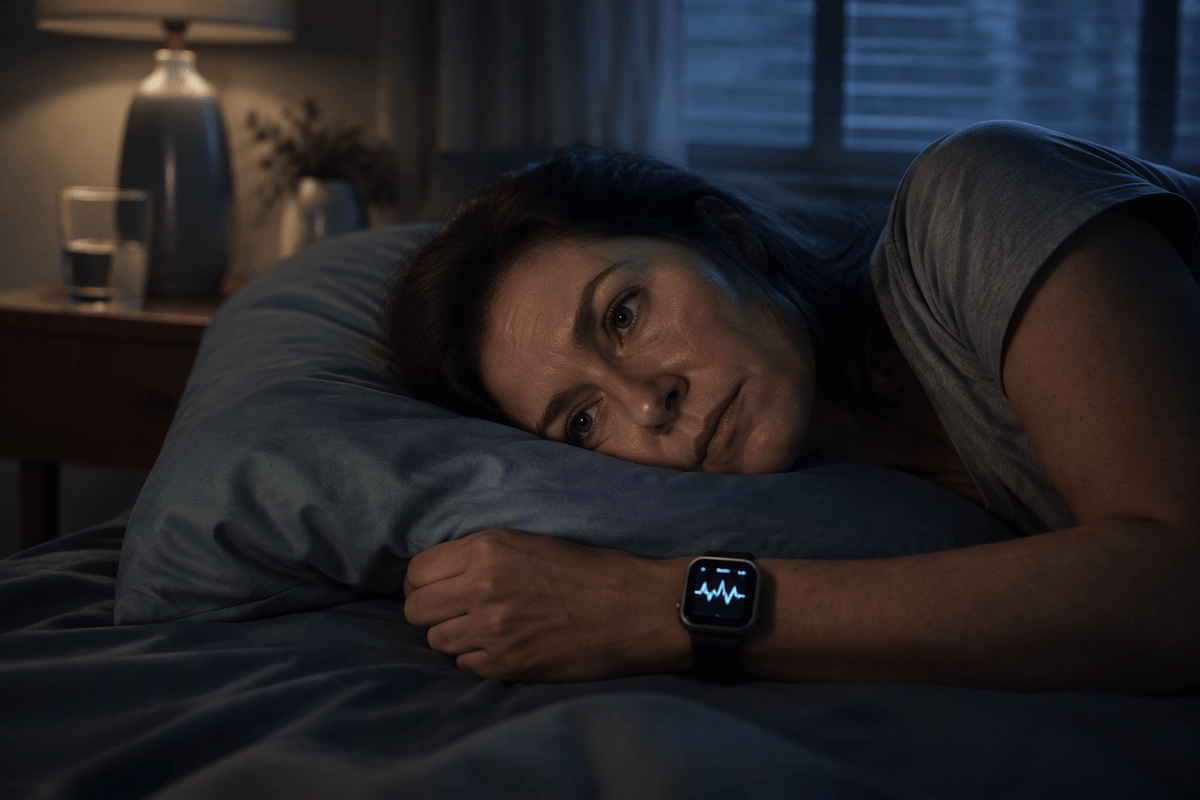
The confusing part is how “normal” you can feel between blips. Someone might bring a clean ECG printout to an appointment and assume that means the earlier flutter was a fluke—while their watch shows a handful of odd readings scattered across three months. In everyday life, that looks too small to matter: a few minutes here, a strange pulse there, then long quiet stretches that make it hard to describe what’s happening.
Registry data has shifted what “typical” looks like because it captures people outside the exam room—those with brief, intermittent episodes that self-correct and never become a dramatic ER story. Instead of one clear, sustained event, the common pattern is a stop-and-start rhythm that shows up at inconvenient times: overnight after poor sleep, after alcohol, during a cold, or when blood pressure runs higher than usual. The “average” patient story stops being useful; it becomes more about how often episodes appear, how long they last, and whether those quiet gaps are shrinking.
Symptoms that mimic stress, aging, or fitness limits
It can feel less like a “heart thing” and more like a bad week: a slightly jittery chest after a tense meeting, a lightheaded moment when you stand up too fast, or a workout that suddenly feels one gear harder. Because it’s not always dramatic, people often describe it as being “run down,” “out of shape,” or “not sleeping right,” especially when the pulse settles before they can check it. Even the body’s normal responses—faster breathing on stairs, a skipped beat after bending over—can blur the line between ordinary strain and a brief rhythm wobble.
Atrial misfires can show up at night, after alcohol, during illness, or after missed sleep—exactly when stress hormones, dehydration, and blood pressure swings are already in the mix. So the symptom gets assigned to the obvious culprit. If those “off” moments start clustering, lasting longer, or showing up with smaller triggers, it may be less random than it looks.
Patterns beneath the surface: triggers, thresholds, trade-offs
Sometimes the first clue isn’t a dramatic flutter—it’s the way your night feels “off.” You wake up too early, your chest feels oddly busy for a minute, and by the time you sit up to check your pulse, it’s already settled. Later, you might notice the same thing after two drinks, a salty dinner, a long travel day, or a head cold: not constant symptoms, but a repeatable window where the body is a little dehydrated, blood pressure runs higher, and sleep gets lighter.
Over time, many people run into a quiet threshold effect. What used to take a clear trigger (alcohol, missed sleep, illness) may start happening with smaller nudges—one bad night instead of three, a lighter workout, a single stressful afternoon. The “feeling fine” between episodes can be reassuring, yet it also makes it harder to notice when the gaps are shrinking or when episodes are clustering into longer stretches that are easier to dismiss than to explain.
Who gets missed most: access, bias, and overlap

It’s often a rushed appointment that tilts the story. You describe a few odd watch alerts and a “busy” chest at night, and the response lands on the most available explanation: stress, reflux, anxiety, perimenopause, dehydration, “just ectopic beats.” None of those are impossible—what complicates things is overlap. Poor sleep and high blood pressure can both make you feel wired and unsteady, and the rhythm blips themselves may come and go too fast to be caught when someone listens for 20 seconds.
The people missed most are the ones whose symptoms don’t match the stereotype of a dramatic, sustained episode: women with vague fatigue or breath-catching, older adults who assume it’s conditioning, and anyone who can’t easily access longer monitoring or follow-up. Even “healthy” exercisers can get waved off because their resting pulse is low and their day-to-day function looks fine. The inconsistency is the trap: it’s easy to downplay what you can’t reproduce on demand.
Testing brings clarity—and new uncertainty for patients
The strange part is how quickly the storyline can flip once testing starts. A short office ECG may look perfectly calm, and that can feel like relief—until a longer monitor is added and the report comes back with a few brief runs you never felt. Or it finds nothing at all, even though your watch still throws an alert at 2 a.m. The same “inconsistency” that made this easy to dismiss is what makes testing feel oddly unsatisfying: one device catches a sliver of time, and the blips don’t always cooperate.
When something does show up, the clarity can create a new kind of uncertainty. People often get handed terms like “burden,” “episodes,” or “runs,” then try to translate them into everyday meaning: Was that night after wine a one-off or a pattern? Does a cluster during a cold count the same as a longer stretch on a normal day? Even with data, the hard part is that risk and next steps usually depend on how often it happens, how long it lasts, and whether those quiet gaps are starting to narrow.
How insights shift follow-up, timing, and expectations
At first, the report can make your week feel strangely “measurable.” You start remembering the nights it happened: the late glass of wine, the after-dinner nap that turned into a choppy sleep, the head cold where your pulse seemed jumpier. That’s often when expectations shift. Instead of looking for one dramatic episode, follow-up becomes about whether your threshold is changing—are the alerts showing up with smaller triggers, are the clusters closer together, are the “quiet” weeks staying quiet?
Timing starts to matter in a more practical way, even if it’s imperfect. People may notice that checking in after a stretch of poor sleep or higher blood pressure tells a different story than a calm week, and that a single normal reading doesn’t erase a month of odd nights. N one of this turns into a neat schedule; it’s still a stop-and-start pattern. But the data can turn “random blips” into a trackable rhythm of windows—when you’re more likely to feel fine, and when you’re more likely to be surprised.